
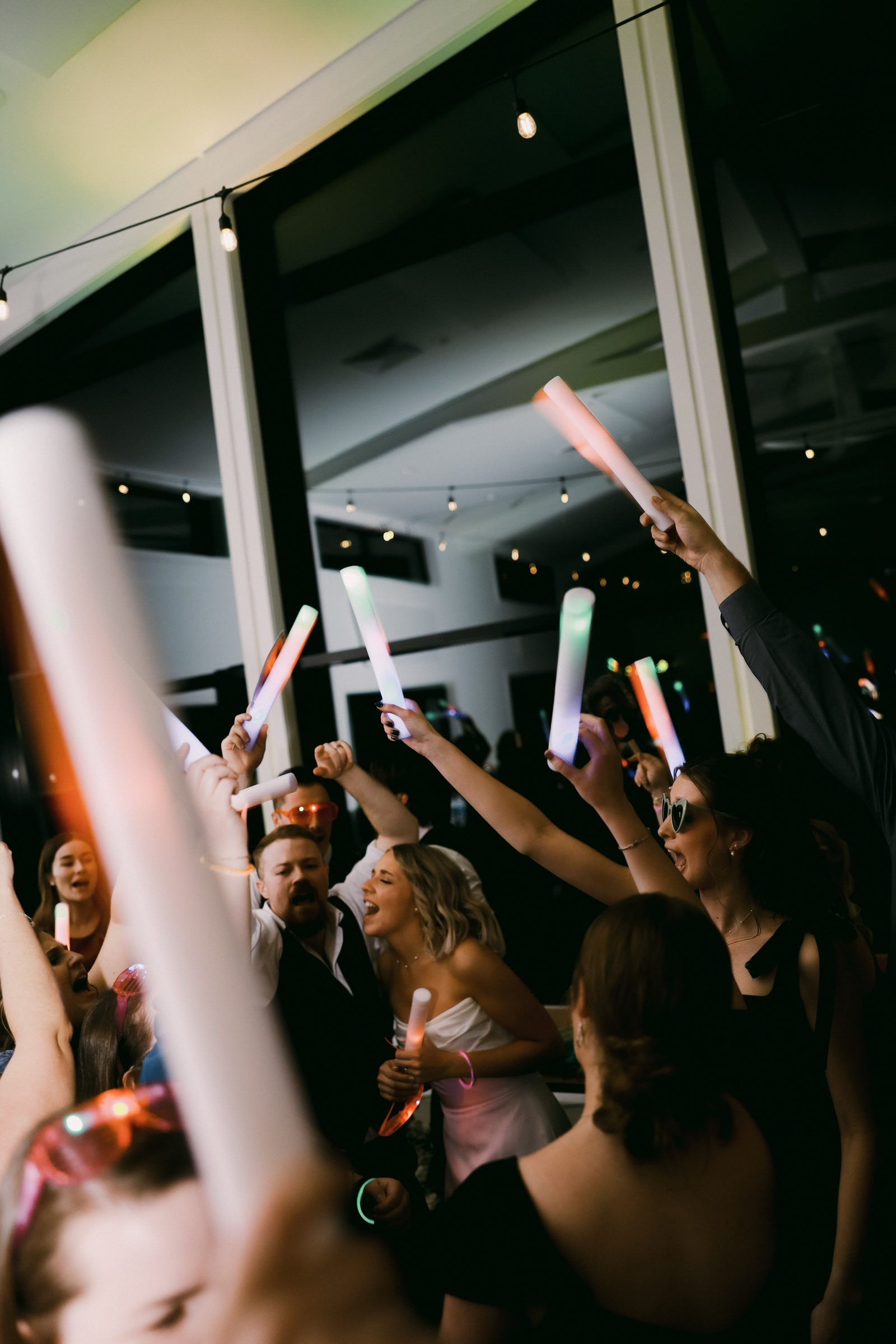
Every couple I sit down with asks some version of the same question. How long should we actually be dancing?
It seems like a small detail. It is not. Get the dance set length wrong and you either kill the room’s energy too early or drag it out until the back third feels like an obligation instead of a party.
I have been doing this long enough that I stopped guessing. I started tracking it.
Why Dance Set Length Actually Matters
Your open dance set is the emotional payoff of the whole reception. Dinner, toasts, first dance, all of it is building toward the part where your friends and family actually let loose on the floor.
If that window is too short, people barely warm up before the lights come on. If it is too long, you get natural dips. Guests peel off to the bar, then to their cars, and the energy you worked all night to build just leaks out.
Getting this number right is not about being rigid with a stopwatch. It is about protecting the moment your guests actually showed up for.
What 80 Weddings Taught Me About Timing
I have asked enough couples about their timeline, and watched enough dance floors fill and empty, that I have real data now, not a guess.
Under two hours, the floor never gets to peak. People are still trickling in from cocktail hour energy when the set ends.
Over two and a half hours, energy starts dipping in the back third. Doesn’t matter how good the song selection is. People get tired, kids start melting down, and the crowd thins out no matter what I play.
Two to two and a half hours is the band you want to land in. Anything outside that window needs a real reason, not just tradition or what a template timeline told you to do.
I can tell you exactly what the miss looks like, because I have watched it from the booth more times than I can count. The set ran long because the couple wanted every minute they paid for, and by the last 45 minutes the floor is down to a handful of people. The couple is saying goodbyes over by the bar, the photographer packed up an hour ago, and songs that would have crushed earlier in the night are getting polite head nods instead of dancing. Nobody did anything wrong. The room was just done before the music was.
The receptions that land inside the window skip that scene entirely. The last song hits while the floor is still loud, everybody shouts the final chorus, and the night ends on a peak instead of a fade. That ending is what people talk about on the way home.
The Sweet Spot: 2 to 2.5 Hours
If you remember one number from this whole post, make it this one. A wedding dance set length of 2 to 2.5 hours consistently produces the best energy curve I have seen across dozens of Central Ohio receptions.
That is not a rule I read somewhere. It is the pattern that shows up over and over once you have actually run the room enough times to notice it.
Inside that window, I can build a real arc. Open the floor strong, ease into a stretch where I read the room and adjust, then close with the songs that get everyone back out for one last push before last call.
When You Should Break the Rule
There are legitimate reasons to run shorter or longer, and I would rather tell you the truth than sell you a one size fits all timeline.
A smaller, tighter guest list, say under 60 people, sometimes peaks and holds fine at 90 minutes because everyone already knows everyone and there is no warm up needed.
A late night reception with a strong bar program and a crowd that skews younger can genuinely hold for three hours, especially if there is an after party built in already.
But those are exceptions with a reason behind them. Defaulting to a longer set because you feel like you are “supposed to” get your money’s worth almost always backfires. I would rather give you an honest 2.5 hours that stays hot than a 4 hour set that limps to the finish.
How I Build Your Timeline Around This Number
This is the part most couples do not think about until we are already deep in planning. The dance set length has to work backward from your ceremony start time, your dinner service, and your venue’s actual curfew.
A venue like Strongwater or The Vue gives you a lot of flexibility on when the floor opens, since bar service and reception space are one room. Somewhere like Franklin Park Conservatory has a more structured flow between cocktail space and reception space, which changes when I actually get the floor moving.
If your reception runs from 6 to 10, I am not waiting until 8:30 to open the floor and hoping for the best. We build the timeline so the dance set has room to breathe and land inside that 2 to 2.5 hour window on purpose, not by accident.
This is part of what we walk through when we talk about your wedding package and investment. It is not just about the hours of coverage, it is about how those hours actually get used.
If you want to see how this fits into the bigger picture of planning your day, my weddings page walks through how I approach timeline and flow for Central Ohio couples.
Ready to Plan Your Reception Timeline?
If you are staring down a wedding timeline template and wondering whether the “dance set” block on it is actually right for your reception, let’s talk it through.
I would rather help you build a timeline that fits your actual guest list and venue than hand you a generic schedule that was never built for your wedding in the first place.
Reach out through the contact form and tell me a little about your date and venue. I will help you figure out what your dance floor actually needs.
Logan